| Hey Diogenes, Data suggests that Javier Milei’s government has significantly reduced poverty in Argentina. But this doesn't tell the full story. If we look deeper, the statistics reveal something more sinister. Also, you may notice things look a bit different here, that’s because behind the scenes we have been working away on improving the technology that powers openDemocracy. If you spot a glitch or have any questions, our inbox is always open: supporters@opendemocracy.net Read more below.
At the end of March, Argentina’s government celebrated a dramatic fall in the poverty rate: 28.2% of the population is now living under the poverty line, down from a peak of 52.9% in 2024, according to INDEC, the official statistics agency. President Javier Milei took to social media to cheer the purported success. “Poverty keeps falling. Fact, not narrative,” he wrote on X in Spanish, adding: “MAGA [Make Argentina Great Again]!” In Milei's Argentina, the idea of ‘fact, not narrative’ does significant work in reshaping how the government frames poverty alleviation. ‘Narrative’ is cast as manipulation, while ‘facts’ are presented as neutral. What gets measured matters, and what doesn’t get measured does not exist. So, the number of people classed as living in poverty is falling not in spite of the Milei administration’s dismantling of comedores populares (community kitchens), programmes to tackle gender violence and the social organisations that offered support, but because of it. What were once reliable measures for gauging poverty are being torn apart.
We don’t have a paywall. We aren't backed by a big media organisation, and we certainly aren't funded by billionaires with their own agendas. We rely on readers like you, people who believe in the power of great journalism to hold powerful institutions to account. If you value independent media that isn't afraid to take on the political establishment, please consider chipping in. |
|
|
|
|
The government is not hiding information; it is destroying the infrastructure that produced that information, and this destruction is the technology of its governance. On Milei’s third day in power in December 2023, he axed the ministries of Social Development and of Women, Genders and Diversity and rolled their functions into the Ministry of Human Capital. That ministry has since cut public funding to community kitchens, gutted the Acompañar programme that received, recorded and responded to reports of gender-based violence and provided assistance to financially dependent victims, and closed the ENIA plan, which had reduced teen pregnancies by 50% and employed six hundred people before it was shuttered. The 144 hotline for gender-based violence victims, which was established in 2003, received more than 900,000 calls in its first ten years of operation and tracked gender-based violence as a category of state concern, has also lost most of its budget in real terms.
The government is not hiding information; it is destroying the infrastructure that produced it, and this destruction is the technology of its governance
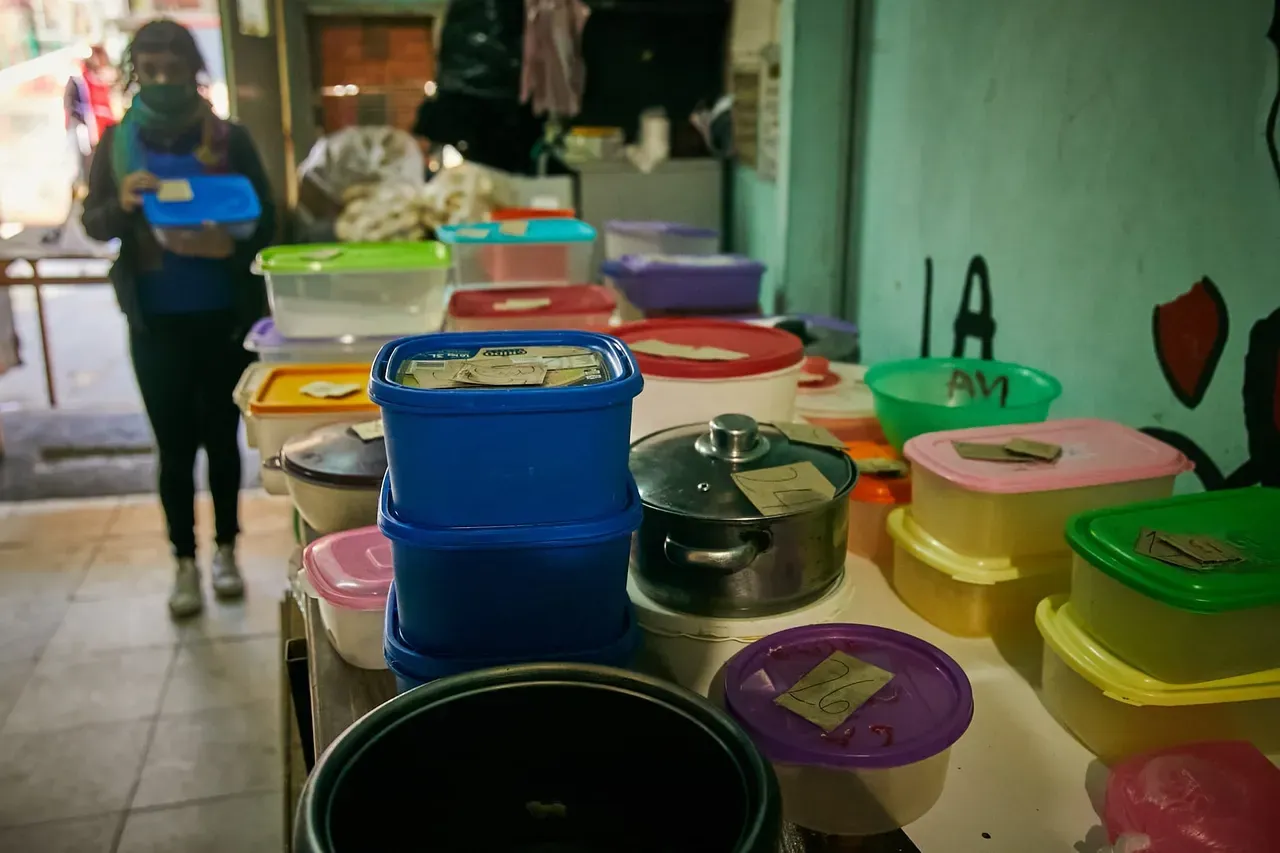
The minister of human capital, Sandra Pettovello, described the cuts as a way to remove corrupt intermediaries and offer direct, transparent assistance to vulnerable sectors. In practice, state agencies and civil society organisations that made certain forms of suffering visible – turning hunger, violence, and precarity into named, countable, politically organised facts – no longer have the resources to do so. Take the comedores populares, which were built through decades of crisis by neighbourhood groups, local clubs, churches, and social movements. They fed people through the 2001 economic crisis, the grinding austerity of Mauricio Macri’s government (2015-2019), and the inflationary crisis presided over by Alberto Fernández’s administration, which preceded Milei.
CandidAsk Our UK local elections tracker is getting more data daily.
In some areas it is already a useful tool for an at-a-glance overview of candidate opinions. We have reached out to more campaigns for their pledge data and welcome anyone to submit info on candidates. |
|
|
|
|
Last year, the government shut the national registry for these community kitchens – effectively ending their state support – claiming there was no longer a need for it. While being registered did not guarantee this support, it’s impossible to know now how many of the 44,000 previously registered continue to function with or without public funds. In the period before Milei’s government (2020-2023), around 4,000-5,000 kitchens received public food supplies per year. By mid-2025, the government was assisting 1,552. It was estimated that the kitchens fed 10 million people as of 2024, but they did not officially reduce the number in poverty, because they did not offer money: Argentina’s poverty measure tracks only whether a household’s monthly earnings cover a basket of goods, not whether people are actually fed. But they were the places where hunger was visible. A family eating at a comedor was part of a network that knew not just how many people it was feeding but why – which households had lost jobs, which were servicing debt, which were one crisis away from living on the street. The women at the centre of the community kitchens – they were often run by feminist and popular organisations – were, among other things, dense systems of social knowledge about the texture of precarity that income surveys cannot reach. What is being destroyed is not a service but a terrain. Argentine philosopher and political theorist Verónica Gago has described this process as the fascistisation of social reproduction: the systematic dismantling of the collective ground on which poor and feminised communities built political life alongside physical survival. The comedores were that ground. They were built through struggle, woven into the fabric of popular and feminist movements, and run by women whose labour was never waged and never counted. To defund them is not only to withdraw a service, but to withdraw the conditions under which that service made certain lives visible as lives worth counting. INDEC income poverty statistics can’t measure food insecurity, debt-financed survival, the hours spent managing financial shortfalls, or the domestic violence that intensifies when money runs out. The organisations that could track those things have been defunded or disbanded. Other measures of poverty have also been cut. The multidimensional poverty index was developed to track deprivations in housing, healthcare, education, and employment alongside income. Under Milei, it has been classified as a non-official, supplementary measure, and it has not been updated since early 2024. Back then, 43.6% of the population lived in multidimensional poverty. The official data also contains its own partial rebuttal. INDEC’S quarterly breakdown shows poverty rose to 32.5% in the last three months of 2025 before the six-monthly average came in at 28.2%, meaning the headline figure conceals a deteriorating trend in the months immediately before publication. And the Catholic University’s Social Debt Watch puts poverty at 36.2% for the same period that INDEC put it at 28.2%, using a broader methodology covering more cities. These experts have also argued that structural poverty has not broken through a floor of 25% in over two decades regardless of which government was in power.
Buried in the statistics is the number the government would not post on social: child poverty stands at 41.3% of children under-14
Also buried in the INDEC report, there is a number the government would not post on social media: 41.3% of children under-14 are living in poverty – after two years of ministers celebrating improvement. Figures presented this week by the Catholic University’s Social Debt Watch are worse: 53.6% of children and adolescents are poor, 28.8% suffer from food insecurity, and 64.8% rely on some form of food assistance. Children are most dependent on the collective infrastructure that has been destroyed. The comedores fed them. The ENIA plan reached their mothers. The Acompañar programme supported the households they grew up in. The state does not need to falsify the data. It only needs to remove the conditions under which certain realities become data at all. Destroy the institution and you’ll destroy the record. What remains is a number that is real and true, and tells you almost nothing about what is happening to the people it purports to describe. |














Comments
Post a Comment