Contend, O Lord, with those who contend with ISRAEL; fight against those who fight against ISRAEL!
Take hold of shield and buckler and rise for ISRAEL'S help! Draw the spear and javelin against ISRAEL'S pursuers!
Washington Secrets: New book reveals how Churchill made JFK
Welcome to Tuesday’s Washington Secrets, your guide to power and politics. OK, there’s an election on. We know. But here’s an idea: Why don’t we worry about it when we have the results in? Today we offer you something else by way of palate cleanser … Plus, well, we can’t help ourselves: Which one of these pollsters has got Michigan correct?
When Jackie Kennedy tried to nurture her husband’s artistic side by buying him a paint set, she was met with ridicule by his family, who mocked them for such an effeminate hobby.
She knew how to turn things around, however.
She bought the future president a book about Winston Churchill’s love of watercolors, which spelled out just why a leader with extraordinary responsibilities needed an arty outlet.
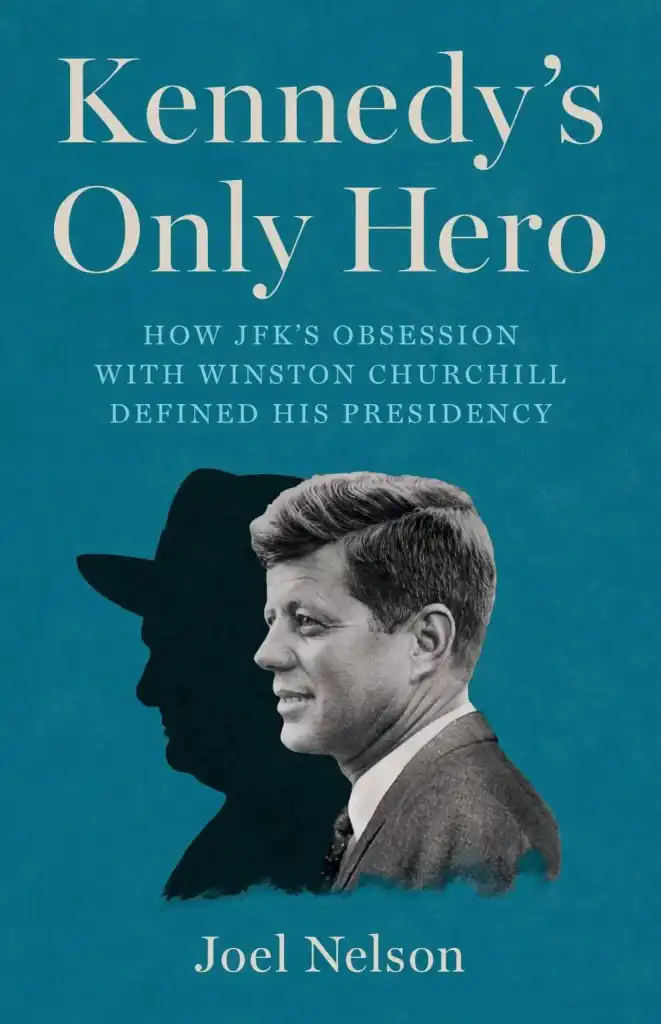
Secrets obtained a sneak peek ahead of publication. The book tells the full story of Churchill’s extraordinary influence over John F. Kennedy, how it began in his teens, bloomed during his time in Congress, and underpinned his foreign policy as president.
It describes how a young Kennedy memorized passages of Churchill’s addresses and even discussed his speeches in bed with a wartime girlfriend.
Time and again he copied chunks of some of his most famous quotations for his own speeches, while aping Churchill’s habits such as painting for relaxation or napping in the afternoon, and he deployed the British prime minister’s management style when he became president, firing off short, direct memos to members of his administration.
It started in the 1930s when Kennedy already had a hero, his father. But Joseph Kennedy Sr., who became American ambassador to London in 1938, was an isolationist who believed Nazi Germany could not be stopped and it was Washington’s duty to persuade Britain to negotiate a settlement.
His son disagreed, convinced by Churchill’s warnings that the world was sleeping while Germany rearmed. He had a new hero.
“Jack imitated Churchill’s policies, he imitated Churchill’s speeches, he imitated Churchill’s books, he imitated Churchill’s mannerisms, he imitated Churchill’s campaigns, and he imitated Churchill’s habits,” writes Nelson. “He kept doing so into the 1950s and, when he ran for the presidency in 1960, he did so on a platform that was constructed, to a fundamental and astounding degree, from policies, phrases, and ideas that he had taken from Churchill.”
He read all of Churchill’s 49 books. Years later, as he became a public figure and even as president, he would quiz foreign dignitaries on their dealings with the great man.
And as he led America through the Cold War, the standoff with the Soviet Union over Cuba, and the growing hot war in Southeast Asia, he was guided by the principle of “arm to parley” learned from those speeches and books.
In other words, and where Churchill differed from many of his contemporaries, was the recognition that it was likely fruitless negotiating unless you did so from a position of strength. Just ask Neville Chamberlain, his predecessor as prime minister, who was hoodwinked by Adolf Hitler.
“Armaments had to be kept equal to commitments, negotiation should come only from a position of strength, and dictators should not be trusted,” writes Nelson. “These lessons that Kennedy learned from Churchill never failed him…”
“Overall, the consistency was remarkable: He called for arming and parleying when he had no power and, once he had it, he armed and he parleyed.”
While those Churchill quotations may have been spotted by reporters and historians, others were less obvious, known to his wife or his Senate staff.
The former British prime minister was an enthusiastic after-lunch napper. Not for him, a quick 40 winks propped up in a chair. He would change into nightwear and bed down, giving him the energy to power through the rest of the day until 2 a.m. — habits covered with amazement by the Times-Herald.
“So Jack began to do the same,” writes Nelson. “After lunch, he would enter his Senate office and take off his suit, shirt, and tie. Then he would put on his pajamas and climb into a hideaway bed that had been installed on his instructions.”
Kennedy’s Only Hero: How JFK’s Obsession with Winston Churchill Defined His Presidency is published by Public Affairs today.
They can’t both be right!
Secrets fanciesAbdul el Sayed to win the Senate race in Michigan. He may be a Democratic Socialist in all but name, but it is at least an ideology. Republicans have struggled to explain exactly what it is they stand for.
The results from Michigan will give us another winner. Which pollsters got it right?
The final two polls could not be more extraordinary.
First came the latest from New York Times-Siena University. It has el Sayed up by 11 points against former Rep. Mike Rogers. Can this be true?
Then Zogby Strategies, friend of Secrets, published its final poll yesterday. It found el Sayed was leading by 2 points, within the poll’s 3.2-point margin of error.
It comes down to a key difference in how the two polls think Republicans will behave. Zogby Strategies has Republicans at about 32% of the turnout. Siena puts it at only 26%.
That is a big difference. And makes it one of the results Secrets will be watching closely to see not just what it means for Democrats and Republicans, but also for pollsters.
A couple of extra points from Zogby Strategies:
The Democratic coalition for el Sayed comes from Democrats, women, Hispanics, blacks, voters under 30, and the union vote. Rogers’ coalition is strongest among men, whites, Generation X, baby boomers, and veterans.
El Sayed voters show greater strength of support, with 71% citing strong support vs. 57% among Rogers’s voters.
The top issue is by far and away inflation and affordability, cited by 53%, followed by jobs and the economy (31%). Healthcare comes in a close third place (27%).
You are reading Washington Secrets, a guide to power and politics in D.C. and beyond. It is written by Rob Crilly. You can reach him at secrets@washingtonexaminer.com with your comments, story tips, and suggestions.
Lunchtime reading
The beer wars: Inside the scramble to control Central Africa’s liquid gold and a prime example of rentier capitalism, with states and big business obstructing everyone else’s ability to produce for themselves.





Comments
Post a Comment