Good evening from Rome,
I'm heading to Abu Dhabi tomorrow to report on what is looking to be a major week of diplomacy and international affairs.
Here's what we're tracking.
UKRAINE
We are set to have a second round of trilateral talks in Abu Dhabi this week on Wednesday and Thursday between American, Russian and Ukrainian diplomats.
"Our team continues working with the American side so that real decisions for the sake of peace can be scaled up," Ukrainian President Volodymyr Zelenskyy said, adding, "There are issues to be agreed upon; there is substance that requires further work."
Zelenskyy said in Davos that there is a plan in place for security guarantees that, if a ceasefire deal is brokered, are ready to go and simply require votes in the U.S. Congress and Ukrainian Parliament.
But all sides agree there is one elusive element to getting a deal done in this present moment: The Donbas Region.
Since our NewsNation team met with President Zelenskyy last year, the position has not changed. The Ukrainians do not want to give up the land that Russia has been unable to take by force, and they especially do not want to cede control of the strategic heights in the East Ukrainian forces are currently entrenched.
If they do, the Ukrainian fear is that Russia will have a strategic footing to invade Ukraine again once President Trump leaves office.
The Kremlin equally views this as a sticking point and says it doesn't see negotiations going very far unless this issue is addressed. Russian Special Envoy Kirill Dmitriev was in Miami this past weekend for talks with the Americans.
President Trump did say he asked Russian President Vladimir Putin to hold off on strikes for the coming days, especially given the cold temperatures in Ukraine and the hits the energy infrastructure has taken. The Kremlin confirmed they agreed to the President's request.
IRAN
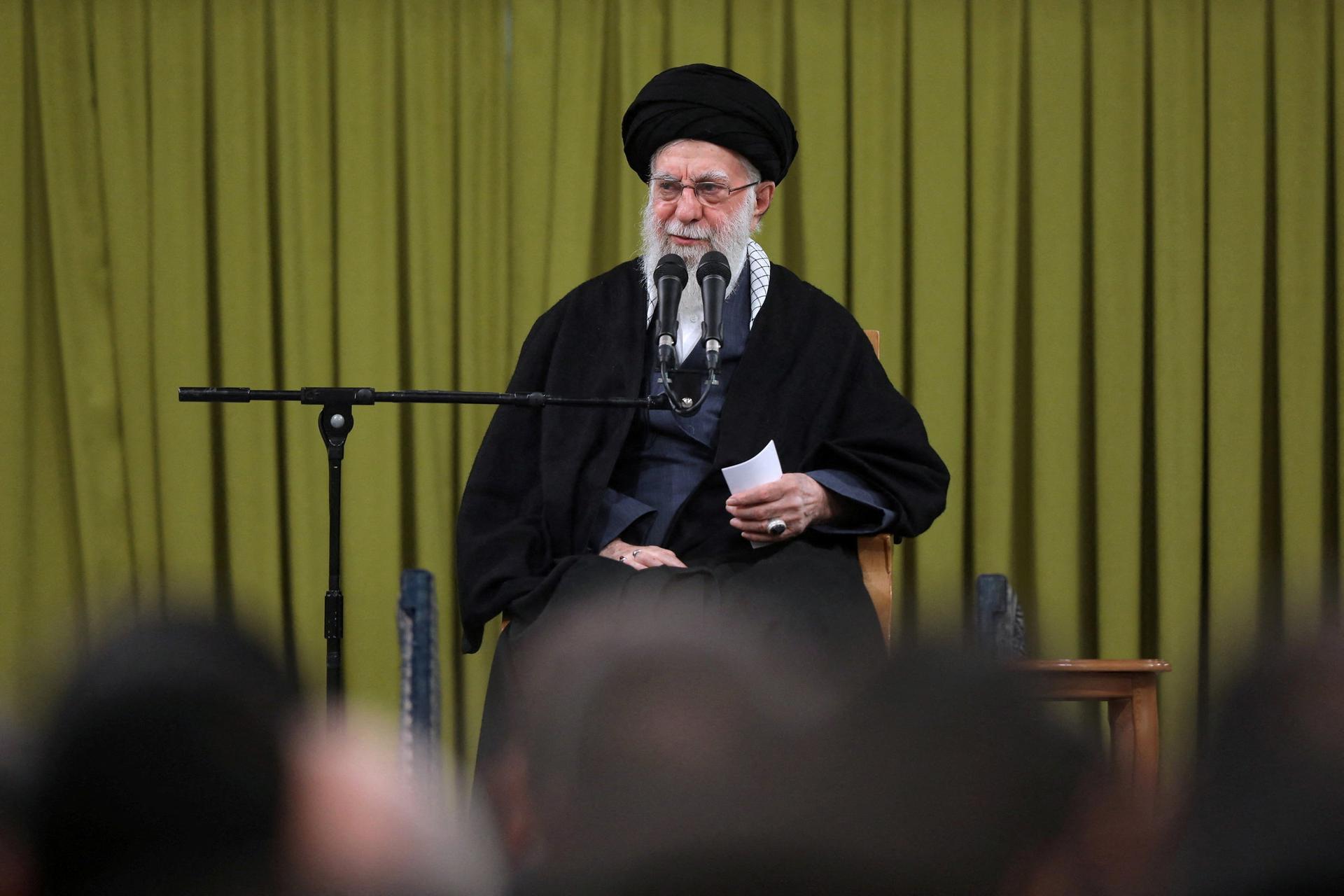
Tense words have continued between Washington and Tehran, with the Supreme Leader threatening a wider conflict should the United States carry out operations against Iran.
"If the US initiates a war this time, it would spill over across the entire region," Ayatollah Ali Khamenei said this weekend.
President Trump was asked about this and responded, "We have the biggest, most powerful ships in the world over there, very close. A couple of days, and hopefully we'll make a deal. If we don't make a deal, then we'll find out whether or not he was right."
Between the tough talk, the diplomatic wheels do appear to be spinning as diplomats from the Gulf States and Turkey, who have publicly stated they don't want to see direct US intervention in Iran, have attempted to bring the temperature down.
Iran's Foreign Ministry spokesperson, Esmaeil Baghaei, said that conversations are happening and they're hoping to move towards face-to-face diplomacy.
"Various points have been exchanged," Baghaei told reporters. "At this stage, we are reviewing and deciding on the details of any diplomatic process, which we hope will reach a conclusion in the coming days."
Axios and Reuters are reporting that Special Envoy Steve Witkoff is expected to head to Istanbul as early as Friday to meet with Iran's Foreign Minister, Abbas Araqchi. Neither Tehran nor Washington has publicly confirmed the meeting.
If the meeting does happen, it might be viewed as a make-or-break conversation given that the U.S. has so much firepower in the region and has been carrying out Naval drills with their Israeli counterparts.
The White House wants a deal that stops the crackdown on demonstrators and backs Iran away from its nuclear aims.
"Iran will not have nuclear weapons capability," Secretary of War Pete Hegseth told reporters today. "And so they can either negotiate on that front, or we have other options—that's why the War Department exists."










 Megyn Kelly -> Pete Hegseth responds to 2017 rape accusation. 🔥 vol. 3, issue 13 | December 6, 2024 Quick Hits All the news you need in...





No comments: