Guten abend from Switzerland.
I'm pleased to be writing to you from my first overseas assignment since my new posting in Rome at NewsNation's international correspondent began last week.
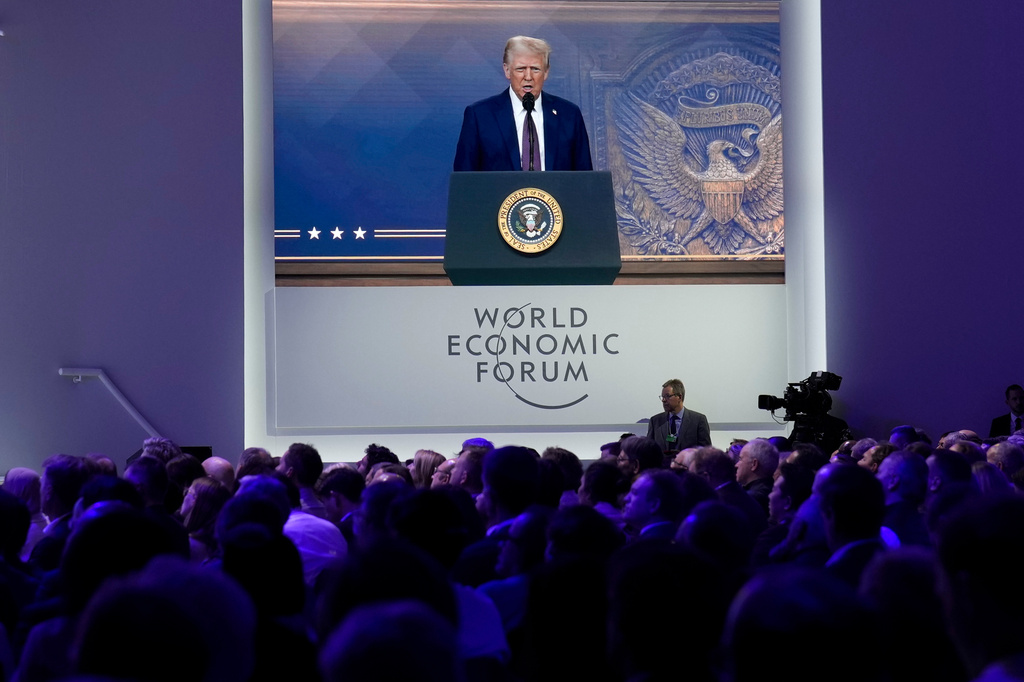
Day by day, this year's World Economic Forum seems to be growing in significance. Sixty-five heads of state will be attending, including President Trump. CEOs from major companies like Nvidia, Palantir and Google will be making the journey to the mountains as well.
But one topic now seems to be rising above all the rest: Greenland.
A lot has been happening on this subject, as the president has repeatedly said he's prepared to go to any length necessary to put it under American control. The White House contends it is necessary for national security and to stop Russia and China from encroaching on the Arctic.
First, we saw NATO European allies move small numbers of troops to Greenland to participate in exercises and to show solidarity with Denmark. This move was not well received by the president, who announced over the weekend he's prepared to hit these European countries with tariffs unless a deal for Greenland is struck.
"Starting on February 1st, 2026, all of the above-mentioned Countries (Denmark, Norway, Sweden, France, Germany, The United Kingdom, The Netherlands, and Finland), will be charged a 10% Tariff on any and all goods sent to the United States of America," the president announced on Truth Social. "On June 1st, 2026, the Tariff will be increased to 25%. This Tariff will be due and payable until such time as a Deal is reached for the Complete and Total purchase of Greenland."
This has sent European nations into a panic, with many coming out against the maneuver today.
"Alliances endure because they're built on respect and partnership, not pressure," said British Prime Minister Kier Starmer. "That is why I said the use of tariffs against allies is completely wrong."
Europe is now weighing its options. Some have floated the idea of retaliatory economic measures to hit back against the United States.
"The American government knows that we could also respond from our side," said German Chancellor Friederich Merz. "I do not want that. But if necessary, we will of course protect our European interests, including our German national interests."
Others, such as Italian Prime Minister Giorgia Milani, have framed all of this as a "misunderstanding" and are hoping direct conversations with President Trump can smooth things over.
And then there's the text message President Trump sent to Norway's prime minister, which NewsNation was able to acquire. The text reads in part:
"Considering your Country decided not to give me the Nobel Peace Prize for having stopped 8 Wars PLUS, I no longer feel an obligation to think purely of Peace, although it will always be predominant, but can now think about what is good and proper for the United States of America," it said.
The focus of this year's World Economic Forum is "A Spirit of Dialogue." The hope from many of these European heads of state is that dialogue can take place in Davos that leads to a proper path forward.
As I said, the World Economic Forum is getting more and more interesting.







 Megyn Kelly -> Pete Hegseth responds to 2017 rape accusation. 🔥 vol. 3, issue 13 | December 6, 2024 Quick Hits All the news you need in...





No comments: