Faith is an integral part of millions of Americans' daily lives. "One Nation Under God" is committed to reflecting America's voices, values and communities covering stories of faith and religion, from the latest headlines to stories of hope. Check out the latest 'One Nation Under God' videos on NewsNation's YouTube. |
|
|
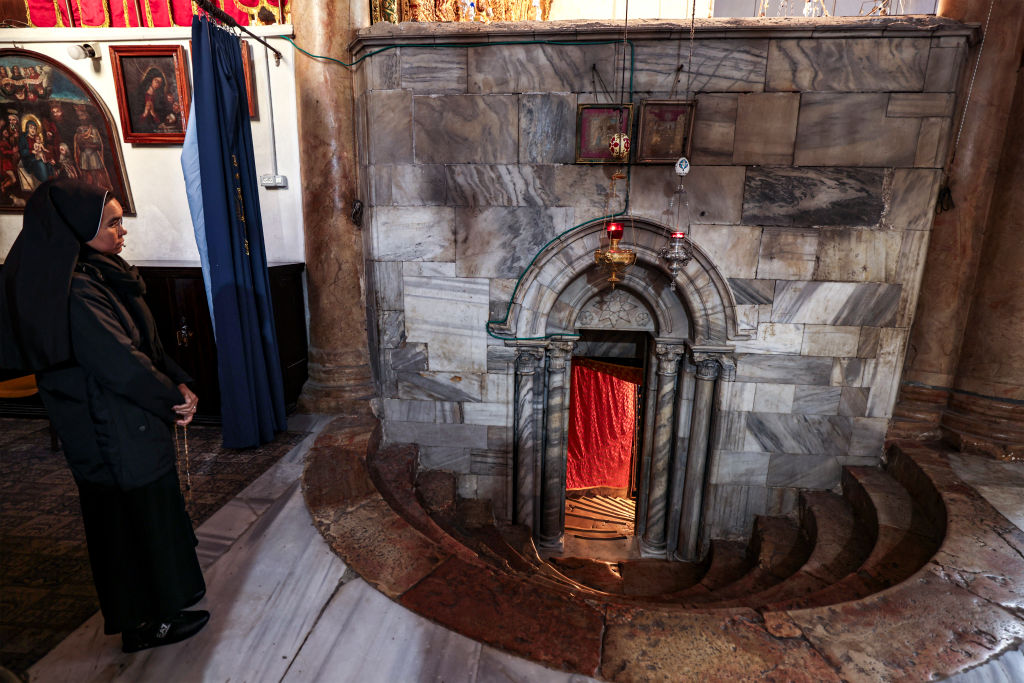
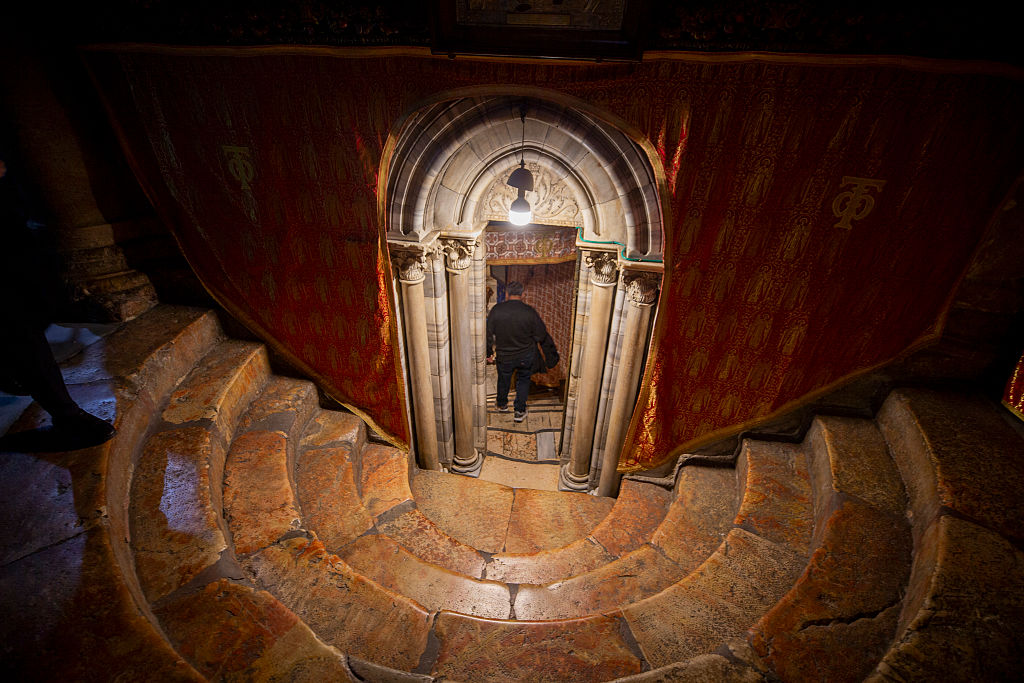
The cave in Bethlehem where Christians believe Christ was born will be undergoing a renovation. The Grotto of the Nativity will be restored for the first time in 600 years, according to the Vatican. The Greek Orthodox Patriarchate of Jerusalem and the Custody of the Holy Land (the Franciscans, members of a Catholic religious order inspired by St. Francis who take care of the holy sites in the Holy Land) announced the joint undertaking last week. "This project embodies a unified Christian commitment to preserve the spiritual, historical, and cultural patrimony of the Holy Grotto for future generations," according to a statement. What is the grotto? The Grotto of the Nativity is a cave located beneath the Church of the Nativity in Bethlehem, identified by many as the birthplace of Christ. The grotto contains two main spots: the place of the birth, marked by a silver star, and the Chapel of the Manger, where Jesus is said to have been laid after his birth, according to tradition. Before the pandemic and the war in Israel, three million tourists used to visit the site annually, according to the Palestinian Hotel Association. During a visit to Rome in November 2025, Palestinian President Mahmoud Abbas called the renovation "a sign of great hope and rebirth for the whole Holy Land," the Vatican said. |
|
|
Italian company to complete the restoration The Vatican announced the same Italian company that restored the Basilica of the Nativity, which houses the grotto, will carry out the restoration. The company, Piacenti SpA, is based in Prato, Italy. In 2017, its CEO, Giammarco Piacenti, told The Associated Press that the work on the basilica was amongst the most satisfying of the restorers' careers because "they are touching heaven with their fingers." According to the Vatican, the restoration includes work on the rock, marble floors, columns and decorations and the star marking the exact spot where Jesus was born. In addition, the holy site will be reinforced. Orthodox, Catholics have fraught past The Vatican called the project a sign of unity, "marked by collaboration between Greek Orthodox Christians and the Franciscans." Over the centuries, tensions between Orthodox Christians and Catholics have been high, stemming from the Great Schism in the year 1054. A major theological dispute over the Trinity, papal authority and liturgical differences led the Orthodox to split off from the Catholic Church. As a result of the schism, the Orthodox churches do not recognize the pope as the supreme, universal leader and head of the Church. They view him as the bishop of Rome, holding a "first among equals" status and reject his claims of supreme authority and infallibility. Despite the tensions, both sides have engaged in dialogue in recent decades, with recent popes apologizing for past actions. Most recently, in 2021, Pope Francis asked for pardon, acknowledging that Catholics have contributed to division with Orthodox Christians during a meeting with Greek Orthodox leaders in Athens. "Shamefully, patriarch, – I acknowledge this for the Catholic Church – actions and decisions that had little or nothing to do with Jesus and the Gospel, but were instead marked by a thirst for advantage and power, gravely weakened our communion," the pope said. Project: sign of unity between Orthodox Christians and Catholics The Greek Orthodox Christians and the Catholic Church said the joint project is a sign of "rebirth." "In the Grotto, the mystery of the Incarnation entered history, and the Christian confession received its earthly beginning. To restore this holy place is to safeguard the continuity of faith, memory, and devotion in the land of the Nativity," the statement said. |
|
|
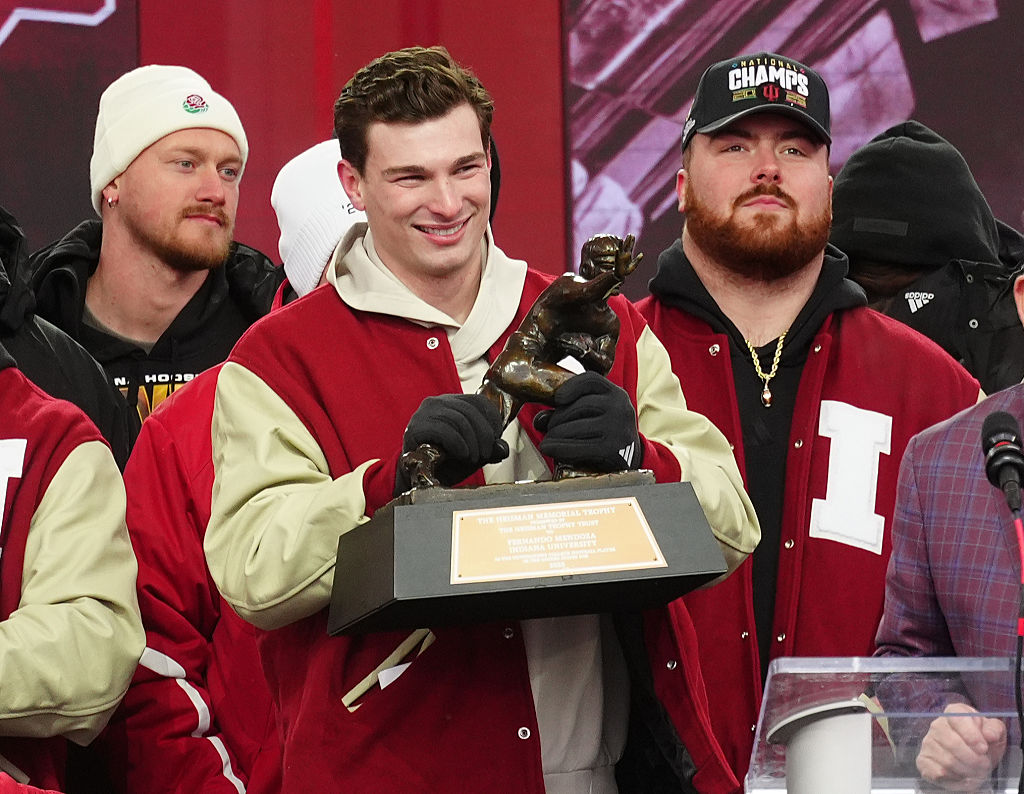
Indiana University quarterback Fernando Mendoza, who guided the Hoosiers to their first national championship, revealed his secret for staying focused weeks before the historic win.
"Pre-game, I obviously don't listen to hype songs, because I have to stay calm, cool and collected. I actually meditate before the game. I meditate, I pray," Mendoza said during a press conference in early January.
Mendoza has been open about his Catholic faith, often crediting his success to God. He says his spiritual life includes weekly Mass, confession and praying the rosary, a Catholic prayer to Mary. Minutes after winning Indiana's first national championship, Mendoza said, "First, I want to give all the glory to God."
Following the Heisman ceremony, the Miami native described his faith as his catalyst. "My faith is a huge component and maybe the sole reason why I got here." he said. "All the bumps and bruises and the path that God has laid out for me, I wouldn't want it any other way."
"Building that faith throughout college and now to be able to share my faith with these amazing teammates and just the community of faith, realizing having God on my side, always praising Jesus Christ, it's incredible. I can't thank the man above enough." Mendoza is also a proud Cuban American who frequently describes his family's heritage. All four of his grandparents were born and raised in Cuba before emigrating to the United States after the Cuban revolution in 1959. Mendoza paid tribute to his grandparents during his Heisman Trophy acceptance speech, addressing his grandparents. "For the love and sacrifice of my parents and grandparents, I love you so much, with all my heart, thank you," he said.
Mendoza described a trip to Cuba during high school as transformative. He has expressed tremendous gratitude for the foundation his grandparents laid for his own success, saying he has drawn resilience and inspiration from them. |
Pope Leo has issued a warning about artificial intelligence and the risks it poses, issuing some rules of thumb: Do not give up your ability to think critically or allow AI to replace human relationships. In his message for the 60th World Day of Social Communications, the American pontiff said, "Technology must serve the human person, not replace it." Shortly after he was elected in May of 2025, the Chicago-born pope said he would make navigating the ethical challenges of artificial intelligence one of the major priorities of his pontificate. Due to his focus on AI, Leo was named to the 2025 "Time 100 AI" list as a key thinker shaping how humanity confronts AI.
In his latest message on modern communication, Pope Leo said that "preserving human faces and voices" means preserving God's imprint on each human being, which is an "indelible reflection of God's love."
The pope warned against artificial intelligence replacing human relationships. "By simulating human voices and faces, wisdom and knowledge, consciousness and responsibility, empathy and friendship," artificial intelligence can "encroach upon the deepest level of communication, that of human relationships," he said.
Pope Leo said relying on artificial intelligence as an "omniscient friend, source of all knowledge … or an oracle of all advice" can erode our ability to think analytically and creatively.
Replacing human interactions with chatbots presents a dangerous scenario, according to the pope. "Because chatbots are excessively 'affectionate,' as well as always present and accessible, they can become hidden architects of our emotional states and so invade and occupy our sphere of intimacy," Leo wrote. "When we substitute relationships with others for AI systems that catalog our thoughts … we are robbed of the opportunity to encounter others," Pope Leo said. Path forward for ethical use of AI
Despite the challenges, Pope Leo provided some guidelines to make sure mankind uses artificial intelligence prudently and in a healthy way.
"The task … is not to stop digital innovation, but rather to guide it and to be aware of its ambivalent nature," the pope said.
Pope Leo calls for transparency, ethical governance, clear labeling of AI-generated content and AI literacy.
'"It is increasingly urgent to introduce media, information and AI literacy into education systems at all levels … so that individuals – especially young people – can acquire critical thinking skills and grow in freedom of spirit," the pope wrote. |
This newsletter is written by Susie Pinto. |
| |
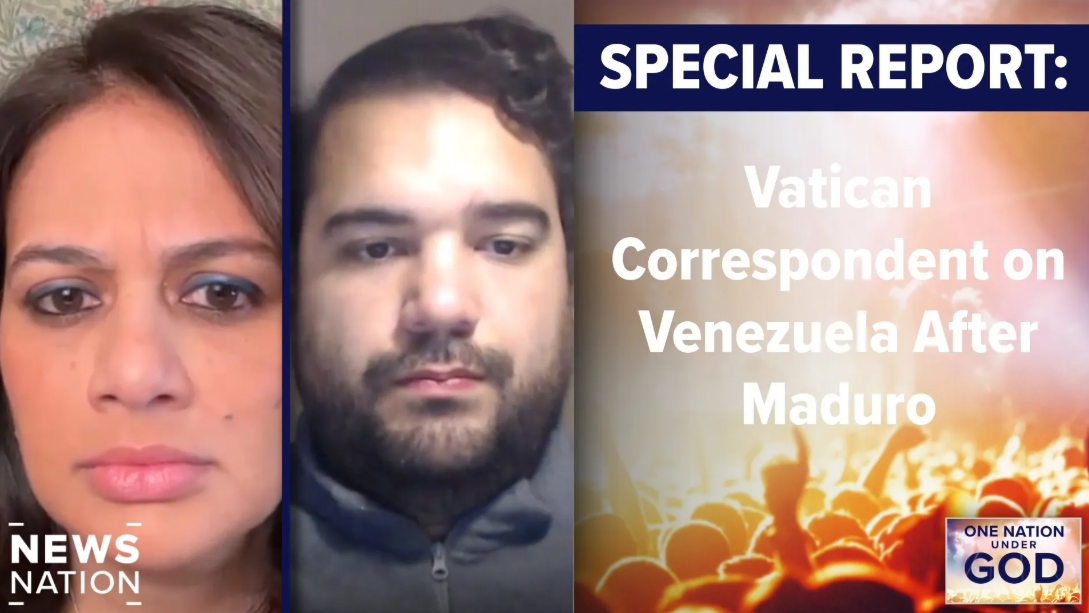
On this episode of "One Nation Under God," Susanna Pinto speaks with Edgar Beltrán, a Venezuelan journalist now living in Rome. Watch here >
|
|
|
NOW TRENDING ON NEWSNATION |
|
|
|





 Megyn Kelly -> Pete Hegseth responds to 2017 rape accusation. 🔥 vol. 3, issue 13 | December 6, 2024 Quick Hits All the news you need in...





No comments: