Faith is an integral part of millions of Americans' daily lives. "One Nation Under God" is committed to reflecting America's voices, values and communities covering stories of faith and religion, from the latest headlines to stories of hope. Check out the latest 'One Nation Under God' videos on NewsNation's YouTube. |
|
|
For more than two millennia, the Star of Bethlehem has captured the imagination of believers, scientists and historians alike.
Described in the Gospel of Matthew as the celestial sign that led the Magi to the newborn Jesus, the star stands at the intersection of faith, astronomy and ancient culture. Was it a miraculous light, a rare astronomical event, or a symbolic narrative meant to convey theological truth? The enduring fascination with the Star of Bethlehem lies precisely in this mystery.
What does the Bible say about it?
The Star of Bethlehem appears exclusively in the Gospel of Matthew (Matthew 2:1–12). According to the text, Magi, often translated as "wise men" or astrologers, from the East observed a star that signaled the birth of the "King of the Jews." Following this star, they traveled to Jerusalem, consulted King Herod, and were ultimately led to Bethlehem, where they presented gifts of gold, frankincense, and myrrh to the Christ child.
Notably, Matthew does not describe the star in technical terms. It "rose," "went before" the Magi, and then "stood over" the place where Jesus was. These details have fueled centuries of debate about whether the phenomenon could be explained by natural astronomy or whether it should be understood as a miraculous sign beyond normal celestial behavior.
Who were the Magi?
Understanding the Star of Bethlehem requires understanding the Magi themselves. The term magoi in Greek refers to scholars or priestly figures, particularly associated with Persia or Babylon. These men were likely skilled in astrology, a respected discipline in the ancient world that interpreted celestial events as signs of earthly significance.
In this cultural context, the appearance of an unusual star could reasonably be interpreted as signaling the birth of a great ruler. Ancient records show that comets, planetary conjunctions, and novae were commonly associated with royal births or political upheaval.
|
|
|
Astronomical theories Over the centuries, astronomers and historians have proposed several natural explanations for the Star of Bethlehem.
Planetary Conjunctions
One of the most prominent theories was advanced by Johannes Kepler in the 17th century. He suggested the star may have been a rare triple conjunction of Jupiter and Saturn in the constellation Pisces around 7–6 BCE. In ancient astrology, Jupiter symbolized kingship, Saturn was associated with the Jewish people, and Pisces was sometimes linked to the region of Judea. A comet
Others have proposed that the star was a comet. The Chinese recorded the appearance of a bright comet or "broom star" around 5 BCE. However, comets were generally viewed as ominous signs, which makes this explanation less compelling as a symbol of divine birth.
A nova or supernova Another possibility is a nova, a sudden brightening of a star, or even a supernova. Chinese and Korean astronomical records mention an unusual star around 5 BC that remained visible for several months. This would align well with the extended journey of the Magi.
Each of these theories attempts to reconcile Matthew's account with known astronomical events, though none fully explains the star's described movement or its precise guidance to a single location.
Theological meaning
For many theologians, the Star of Bethlehem is best understood not primarily as an astronomical puzzle but as a theological sign. Matthew's Gospel was written with a Jewish audience in mind, and the star echoes Old Testament imagery, particularly Numbers 24:17: "A star shall come forth out of Jacob, and a scepter shall rise out of Israel."
The star also carries profound symbolic meaning. It appears to Gentiles, not to King Herod or the religious elites of Jerusalem, underscoring a central Christian claim: that Jesus came not only for Israel but for all nations. In this sense, the star is a sign of revelation, drawing outsiders toward truth.
Early Christian writers such as St. John Chrysostom argued that the star behaved in ways no natural star could, suggesting it was a divine light, perhaps angelic in nature, sent specifically for this purpose.
Faith and mystery
Modern scholars often emphasize that Matthew was not attempting to write an astronomical treatise. His concern was theological: proclaiming Jesus as the fulfillment of prophecy and the true king whose birth disrupted the powers of the world.
Whether the Star of Bethlehem was a miraculous light, a rare convergence of planets, or a divinely timed natural event, its power endures because it points beyond itself. It represents the meeting of heaven and earth, of science and faith, and of human searching and divine revelation.
|
|
|
A group of Buddhist monks from the Huong Dao Buddhist Temple in Fort Worth, Texas, has set out on an extraordinary journey — a 2,300-mile pilgrimage dubbed the "Walk for Peace" — that will take them from Texas to the U.S. Capitol in Washington, D.C. with a message of unity, compassion, and healing for the nation, according to WJLA.
The trek began on Oct. 26 and is expected to span about 120 days, with the monks walking through at least ten states and making stops in state capitals and local communities along the way. The effort is rooted in Buddhist principles of mindfulness and peace, and the monks hope their journey will encourage reflection on compassion and unity in a time of social and political division. According to WJLA, a dozen monks took to the road in early December, continuing their steady progress as they tread toward the nation's capital. The monks' mission is not only spiritual but also symbolic, aiming to bring messages of healing and goodwill to towns and cities across the country.
The pilgrimage has not been without challenges. In mid-November, two monks were injured when a support vehicle escorting the group was struck by a truck in Dayton, Texas, leading to hospitalizations and a difficult recovery process for those affected. However, organizers say the group has pressed on, bolstered by community support and their own resilience.
During the journey, the monks follow traditional practices — such as walking mindfully, relying on community support and observing simple daily routines — that underscore their message of peace and humility. They often walk with minimal possessions, maintain disciplined routines, and extend friendliness and respect to everyone they meet.
The pilgrimage is expected to conclude in February 2026 with a gathering at the U.S. Capitol, where the monks plan to share a brief message of healing and unity with the public. |
|
|
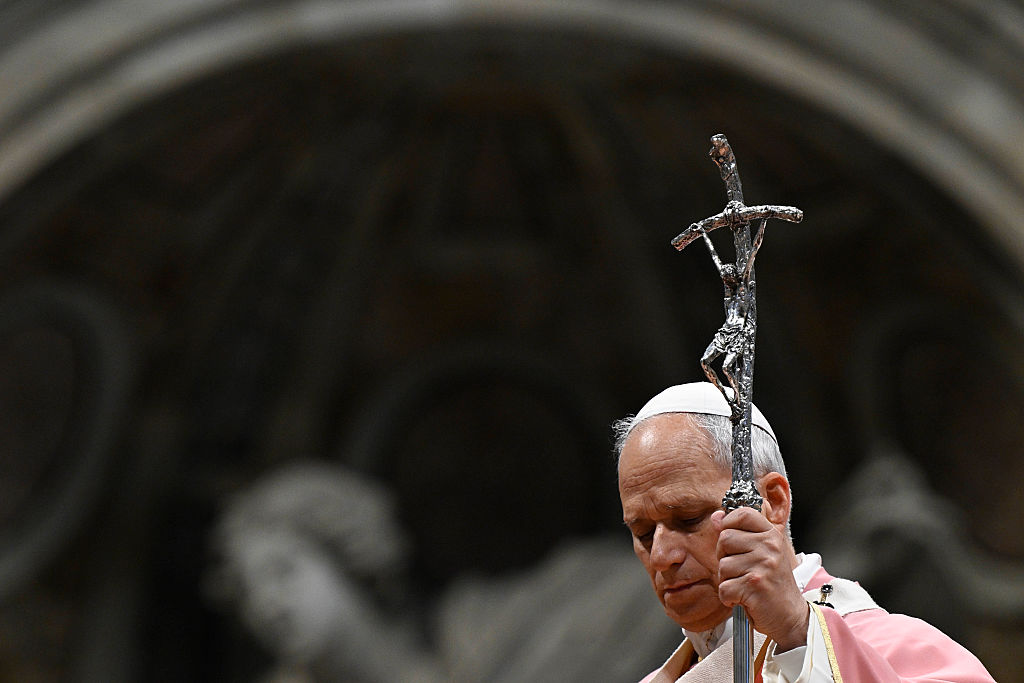
Pope Leo XIV has been included in Vogue magazine's annual list of the 55 Best-Dressed People of 2025, placing the head of the Catholic Church alongside global figures from music, film, sports, and politics.
Published by Vogue on Dec. 11, the prestigious fashion and lifestyle magazine highlighted the Pope's sartorial presence over the past year, describing him as one of the year's most "extremely fashionable characters," a description typically reserved for celebrities and trendsetters.
The list spans artists like Rosalía and Bad Bunny, actors such as Jennifer Lawrence, and cultural icons like Michelle Obama and Venus Williams.
Symbolism and tradition
Vogue singled out Pope Leo's first public appearance following his election earlier this year on May 8 as a defining fashion moment. The Pope, who took office just seven months ago, appeared on the central loggia of St. Peter's Basilica wearing a red satin mozzetta and a wine-colored stole embroidered in gold, accented with a pectoral cross on a golden silk cord – attire praised for its elegance and craftsmanship.
|
|
|
Vogue noted that this style marks a departure from the more austere aesthetic of his predecessor, Pope Francis, who was known for simpler dress after his election in 2013. Vogue attributed this shift to the current pontiff's embrace of traditional liturgical garments, meticulously tailored yet rich in historical and theological symbolism.
Fashion meets faith
Although popes have long worn elaborate vestments for liturgical and ceremonial reasons, Vogue's recognition underscores how papal attire can transcend its religious context to capture broader cultural attention. Editors highlighted how Leo XIV's choices reflect both continuity with centuries-old church traditions and a personal visual identity that resonates beyond ecclesiastical circles.
A broader cultural moment
Pope Leo XIV's appearance on the Vogue list also reflects his increasingly visible engagement with culture beyond strictly religious spheres. Over the course of 2025, he has hosted a range of public figures from film and art at the Vatican, signaling a papacy that is attentive to contemporary dialogues across media and society.
|
|
|
This newsletter is written by Susie Pinto. |
|
|
NOW TRENDING ON NEWSNATION |
|
|
|












 Megyn Kelly -> Pete Hegseth responds to 2017 rape accusation. 🔥 vol. 3, issue 13 | December 6, 2024 Quick Hits All the news you need in...





No comments: