Portugal's parliament approved a bill last week that bans face veils worn for "gender or religious" reasons in a move that is seen as targeting the face coverings worn by some Muslim women.
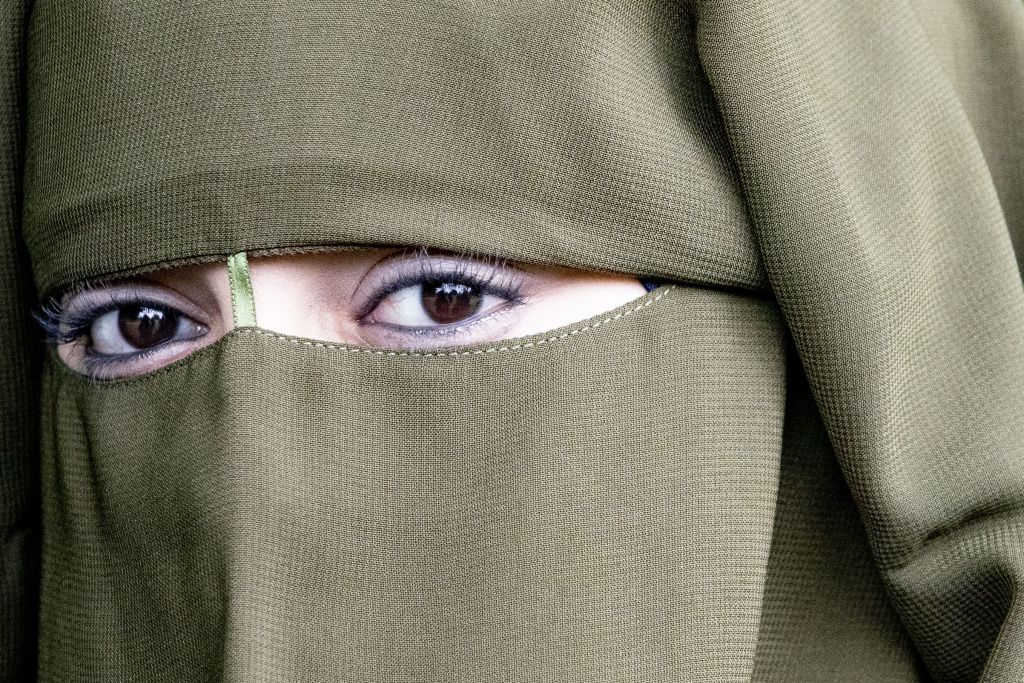
The bill was sponsored by the conservative Chega party and bans burqas, a full-body garment that covers a woman from head to foot, and niqabs, the full-face Islamic veil with space around the eyes, from being worn in most public places.
The fines for wearing face veils in public would range between 200 and 4,000 euros ($234 and $4,669).
Lawmakers from other parties disagreed.
"This initiative is used solely to target foreigners, those who have a different faith," said center-left Socialist Party lawmaker Pedro Delgado Alves, whose party voted against the bill.
President Marcelo Rebelo de Sousa still could veto the bill or send it to the Constitutional Court for review.
Full or partial bans on face and head coverings
If signed into law, Portugal would join Austria, France, Belgium and the Netherlands, who have full or partial bans on face and head coverings.
The Quran encourages women to observe modesty, and some women interpret this to include covering the face and body. The burka is mandatory for women in public in Afghanistan. In Iran, women are required to wear a headscarf. Other Muslim countries such as Saudi Arabia have a public decency law requiring women and men to wear loose-fitting clothing.
Wearing a burqa in public is protected under the First Amendment of the U.S. Constitution, which guarantees freedom of religion.








 Megyn Kelly -> Pete Hegseth responds to 2017 rape accusation. 🔥 vol. 3, issue 13 | December 6, 2024 Quick Hits All the news you need in...





No comments: