The next targets
So, is marriage equality now under threat in the UK, too? While the legalisation of gay marriage in the UK 12 years ago was unrelated to EU legislation, the British right-wing press has long connected its Euroscepticism to the expansion of LGBTIQ rights.
In 2013, Daily Mail journalist Andrew Pierce (now also a presenter on GB News) accused Conservative prime minister David Cameron of "deserting the Tory faithful" by legalising same-sex marriage and supporting the UK remaining in the EU.
The following year, UKIP leader Nigel Farage also stated his opposition to same-sex marriage being legalised while the UK was in the EU and "under the auspices of the European Court of Human Rights", claiming churches would be forced to hold gay marriage ceremonies against their will. Farage, now the leader of Reform UK, repeated this view as recently as this year, saying Cameron had been "wrong" to legalise same-sex marriage without including it in his manifesto.
While marriage equality is broadly popular in the UK and is unlikely to be directly targeted by any political party, leaving the EU and the oversight of its court has made us more vulnerable to both strategic litigation and domestic legislation that seeks to erode anti-discrimination protections.
We can already see this happening. Having previously pledged to restrict the rights of trans people, the Conservative Party used its 2024 election manifesto to promise to limit spending on Equality, Diversity and Inclusion initiatives in the public sector. Reform UK, meanwhile, has announced its intention to scrap the Equality Act altogether.
Some MPs are also trying to get ahead to prevent rights from being restricted down the line. This is the case with abortion, which is still not entirely safe despite being partially decriminalised in England and Wales in June. Journalists, including those at openDemocracy, have exposed how US anti-abortion groups are pouring money into the UK to advance their cause, including by funding so-called 'pregnancy crisis centres' that attempt to dissuade people from seeking abortion care.
Earlier this year, Labour MP Stella Creasy introduced an amendment to the Crime and Policing Bill that would have enshrined abortion as a human right and protected people who help somebody to have a termination, such as medical professionals. Explaining her amendment, which in the end did not go to a parliamentary vote, Creasy referenced the experiences of US pro-abortion campaigners and said she wanted to protect abortion rights from a "future regressive government".
Attacks on Article 8
Across the board, the greatest threat to our rights concerns the European Convention on Human Rights (ECHR). The treaty guarantees certain fundamental civil and political rights to people in Europe and is under attack both across the EU and in the UK, including by the Christian right, according to Martijn Mos of Leiden University in the Netherlands.
In the UK, right-wing politicians and pundits frequently criticise Article 8 of the ECHR, which concerns the right to respect for private and family life. In 2010, the European Court of Human Rights confirmed that this article protects those in same-sex relationships, and it is often invoked by people seeking asylum who are at risk of persecution for their sexuality in their home country.
Before the referendum, the Daily Mail suggested that Brexit was a first step to leaving the ECHR, which EU member states are required to sign up to. Even Labour MPs are now calling for reforms to Article 8 or the UK's withdrawal from the convention, as the government seeks to take a tougher stance on migration to appease the right.
Either option would affect not only vulnerable would-be asylum seekers, but also LGBTIQ people, whose rights have previously been advanced by landmark rulings that found the UK in violation of Article 8. A trans woman – the UK's first trans judge – has already launched a legal challenge against the UK in the European Court of Human Rights to argue that the Supreme Court's ruling on the Equality Act breached her rights under Article 8 (as well as two other articles).
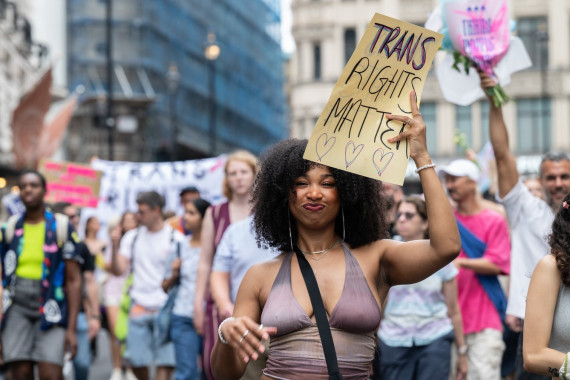
That case will undoubtedly be exploited by the press as another reason to leave the convention, not least since the British press, like many US news outlets, has in recent years waged a deeply hostile, anti-trans campaign. A 2022 report by the Council of Europe cited 'vitriolic' media campaigns and rising online abuse in its warning about rollbacks of trans rights in the UK.
It's no coincidence that this anti-trans moral panic has intensified since the 2016 referendum; leaving the European Convention and further eroding the Equality Act are the next steps in a plan shaped decades ago. Brexit was not the end, but the means – the first step to unpicking equalities and human rights protections in the UK.
Charlotte Galpin is an associate professor at the University of Birmingham












No comments: