By 1 August 2025, we didn't have any bread left in our tent. I had 200 shekels (around $60) in my bank account, but when I went to a cash liquidity seller, I could only withdraw 100 due to the charges. I took the money to a GHF aid centre, hoping to buy something to feed my family.
After walking to the centre on an empty stomach, under the scorching sun, I collapsed on arrival. When I regained consciousness minutes later, I realised my $100 had been stolen. That moment felt even worse than the first time I was displaced or when I realised that my home had been bombed.
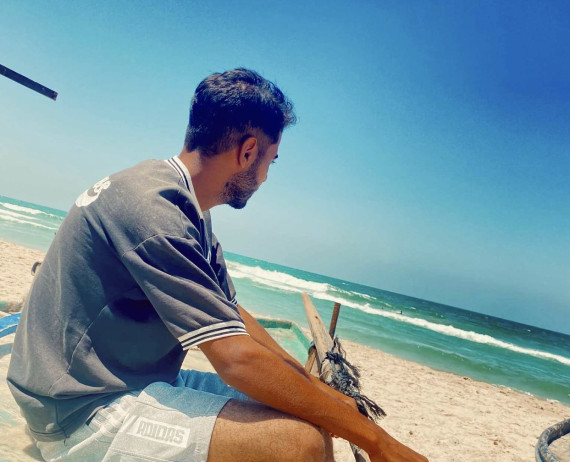
I knew then that famine was harsher than anything else I had endured. As I walked back to the tent, I was overwhelmed with despair, not knowing how I was going to return to my family empty-handed. My eyes burned and breathing felt heavy, as if grief was choking me. I decided to sit by the sea for a while, unsure what I would say to my family.
Standing on the shore, I saw a boat approaching. Two fishermen, worn and weak like shadows, struggled to pull it ashore. I called out and walked over to help. Out of nowhere, I heard myself asking if I could become a fisherman with them.
"Do you know how to handle a fishing rod?" they asked. I didn't, but I said I could swim and would help them however I could in exchange for some of their catch to feed my family.
They told me, "We leave just after dawn and return around noon, usually empty-handed. Sometimes we catch turtles to eat. There are many dangers; boats are targeted, some fishermen captured, and random gunfire hits us daily."
I remembered seeing a video of a young man being targeted by an Israeli strike while at sea. But what choice did I have? "I'll go with you," I said, without hesitation. They told me to come back early the next morning.
When I returned to the tent, my family was shocked by my tired appearance. I told my them everything, and my mother cried without realizing it. I drank some water and tried to rest, eventually falling asleep hungry.
The next day, the alarm rang – my old university alarm. I didn't turn it off immediately, I wanted to dream a little about my past life: my university, the bus, the cafeteria, my friends' chatter, my dreams that have slipped away.
"Hassan, wake up! The alarm is ringing!" My brother Mohammed's voice woke me. I was back in the nightmare I cannot escape.
Since then, every day I have gone out to sea, despite all its dangers, cast my fishing net and my line, and hoped to come back with food for my starving family. Sometimes I work long hours under the relentless sun, and other times in the cold early morning when no life stirs around me.
I know well that one day I might never return. Earlier this year, the UN reported that the Office of the High Commissioner for Human Rights has documented multiple cases of fishers being "targeted generally without warning, while fishing using paddling boats posing no discernible threats to the Israeli Naval Force, resulting in their death or injury".
But despite all my fears, I go to sea, and I hold on to hope for a better tomorrow.
Hassan Herzallah is a Palestinian translator and writer based in Gaza.










No comments: