Ahead of assuming the Oval Office, now-President Donald Trump laid out a "carrot and stick" approach to Russia. The Alaska summit was certainly a big carrot for the Kremlin as Russian isolation took its last breath and Russian President Vladimir Putin found himself on U.S. soil.
Perhaps the carrot will work, or maybe the White House will have to revert to the stick.
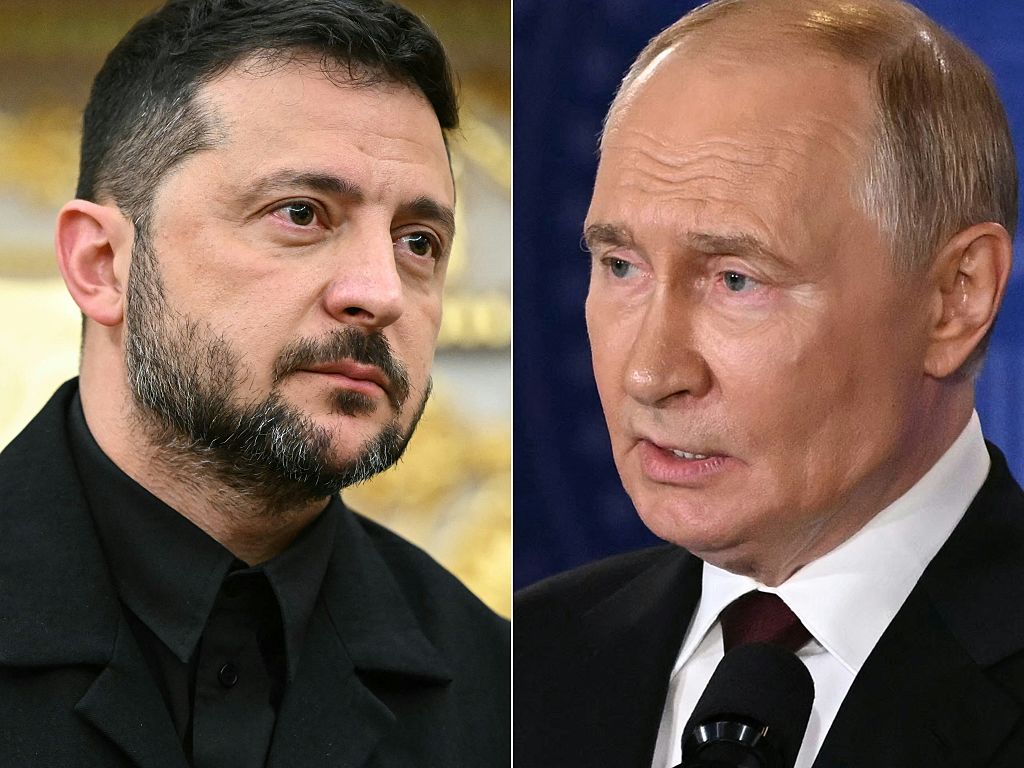
The goal is clear: Get Zelenskyy and Putin together for a bilateral meeting, and then the U.S. will get involved to seal the deal.
While the White House said we can expect a bilateral meeting to take place within the next two weeks, Russia has publicly slow-walked the process.
Watch: US, NATO weigh security guarantee for Ukraine >
Russian Foreign Minister Sergei Lavrov said today in Moscow: "Our president has repeatedly said that he is ready to meet, including with Mr. Zelenskyy … with the understanding that all issues that require consideration at the highest level will be well worked out, and experts and ministers will prepare appropriate recommendations."
In short, Russia is not ready to formally sit down and negotiate until there are more negotiations. They're not committing to a date or timeline.
Lavrov continued: "When and if — hopefully, when — it comes to signing future agreements, the issue of the legitimacy of the person who signs these agreements from the Ukrainian side will be resolved."
To understand the present state of affairs, it's important to understand Russia's view toward Ukraine — and further understand that a sit-down would strike at the antithesis of the Russian posture.
The Kremlin does not view the leadership in Kyiv as a legitimate government. They view it as a form of anti-Russian propaganda and protest propped up by the West.
In 2021, Putin published an essay entitled "On the Historical Unity of Russians and Ukrainians," arguing that Russia and Ukraine are one and the same.
Days later, former Russian President Dmitry Medvedev published a follow-up essay supporting Putin's stance. He went further, explaining Russia's position that negotiations with Kyiv are "meaningless" under their present government.
From the Atlantic Council: "Directly echoing claims made by Putin in his July essay, Medvedev argued that Ukraine was currently under the 'direct foreign control' of 'American patrons' and 'overseas masters,' before concluding, 'It makes no sense for us to deal with vassals.'"
Read more: US prepared to use air power to support Ukraine >
Additionally, Russia views Ukraine's land as Russian in origin. The etymology of the name "Ukraine" is derived from the Slavic word "borderlands."
All of that to say, engaging in direct talks or negotiations with Zelenskyy would contradict the last few years of Russian posturing toward Ukraine's current government. This is why the Ukrainians have been frustrated, contending they are sending high-level diplomats to talks in recent months while Russia refuses to do the same.
The last time Putin and Zelenskyy met in person was in 2019, and a repeat would be a huge breakthrough.
Will it happen? That remains to be seen.








 Megyn Kelly -> Pete Hegseth responds to 2017 rape accusation. 🔥 vol. 3, issue 13 | December 6, 2024 Quick Hits All the news you need in...





No comments: