Marina Mazur was on the phone with her boyfriend early on February 24 when she first heard what she assumes were rockets flying over her Ukrainian family's home in Kyiv.
For months, Ukrainians had been questioning whether the Russians really would attack. In an instant, she knew. "We understood, it's like invasion, and actually that it is war," she said.
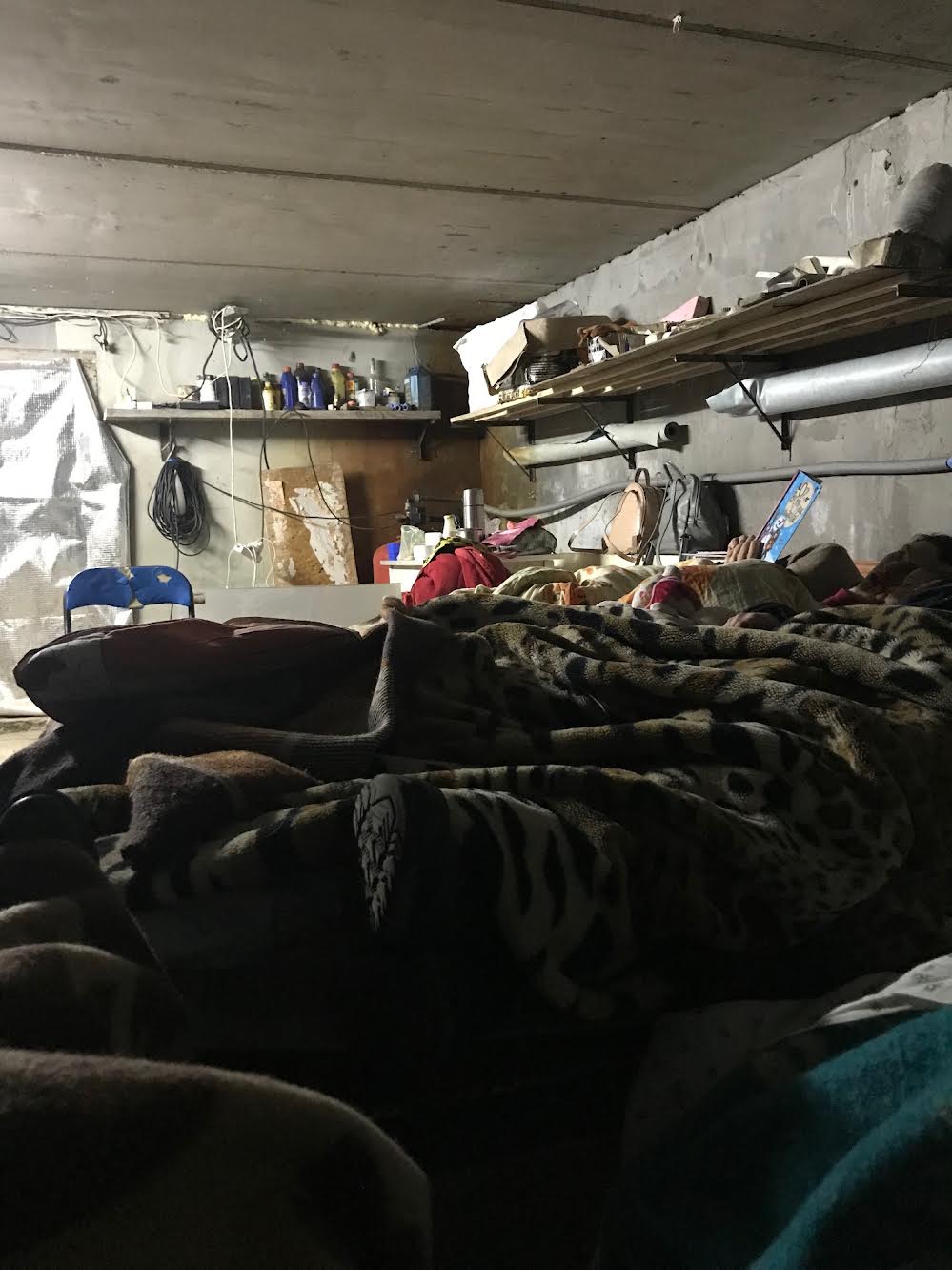
The 35-year-old single mother said she rushed into her 14-year-old son's bedroom, and told him to get dressed. They gathered basic necessities, and decamped to a shelter in the basement of her parents' home, along with Mazur's parents, sister, brother-in-law, and niece.
Basement shelter in the home of Marina Mazur’s parents.
They stayed there for two days, before Mazur and her son fled Kyiv with her sister's family. She and her son now are among the roughly 1.5 million refugees who have fled Ukraine before and after the Russian attack. They are staying with colleagues in Poland. Mazur, who works in logistics for FedEx in her native Kyiv, recently shared her story with National Review.
Mazur said there have been rumblings of a potential Russian attack since last fall, but "many people just couldn't put in their heads that could happen." Mazur said she, too, had doubts. Her boyfriend, a Floridian she met through an American dating website, sent her news from American sources, hoping to convince her to flee the country.
She headed west for a couple of weeks in early February to be closer to the Polish border, but ultimately, she returned home to Kyiv. The invasion occurred soon after her return.
"It was beyond scary," she said of hearing the rockets and explosions. "It was like, you know, when you are frozen and you don't know where to run, what to do."
For two days, Mazur said, she and her family stayed sheltered in her parents' basement. But it became clear that staying there was not a permanent solution.
"The third day, like me, my sister, and her husband, we realized it will not be any better in Kyiv, that it's not going to stop, that no negotiations between governments will work, and we decided to get out, at least from Kyiv," she recalled.
They packed their things in their car – clothes, toiletries, medicine, documents – but they didn't take much, in case they needed to walk part of the way to the Polish border. Then they left Kyiv.
Mazur said people who fled the first day or two after the attack had to wait for hours in traffic jams, but by the time they left, the roads were mostly clear. "We left Kyiv pretty fast," she said.
She recalled driving past many abandoned vehicles; cars and trucks that had been in minor crashes or that had run out of gas. She didn't witness any fighting, but she said she heard shooting and explosions, and saw planes flying over the city.
Mazur said she had mixed emotions as she fled her home.
"I want to keep my son safe, and I want to be safe, but I still feel kind of guilty to leave my parents there, and even now I'm talking to them several times a day," she said. Her parents remained behind to protect their home from potential looters, she said. "I tried to convince them to leave with me. I'm still trying to do that."
The group stayed that first night at the home of a family friend. That's when her sister decided against going any further. In late February, the Ukraine government prohibited men 18 to 60 from leaving the country. Mazur said her sister didn't want to leave her husband.
Mazur decided to continue on to Poland with her son. She said she reached out to some colleagues in western Ukraine who are volunteering with the evacuation effort, who picked her up and continued moving her and her son west. They then connected her with another volunteer, who drove Mazur and her son the rest of the way to the Polish border.
Mazur said they didn't encounter any Russian troops during the three-day trip. She had heard stories of Russians shooting up civilian vehicles in eastern Ukraine, and she had worried about being targeted on the road. She said her boyfriend in Florida stayed on the phone with her for much of the trip trying to keep her composed, and to keep her focused west.
Mazur and her son are living for now in the home of some of her Polish colleagues. She called it "very psychologically weird." They don't speak the same language, but their languages are close enough that they can communicate.
"They're nice people, and they're very nice and very kind to me, and very supportive," she said of her Polish colleagues, "But still, it's not my place."
Before the invasion, Mazur was planning a trip to Greece with her boyfriend. He's now trying to meet up with her in Poland. Mazur said she is the type of person who likes control, who likes knowing she has a job, and a home. Now she has none of that.
"Everything is strange. Everything is different," she said. "I'm basically like a gypsy."
And even though she and her son are safe, she said she still can't really relax. She's in constant contact with her parents in Kyiv. She worries about her sister and her niece and other family members who remain in Ukraine. If and when she is able to return home, she worries about what she'll be returning to.
"I can't say that I'm sure it will be over in a week, or even in a month, or maybe in many months," Mazur said of the war. "I just cannot realize that when it will be over, will we come back . . . to absolutely destroyed cities, absolutely destroyed country."










No comments: