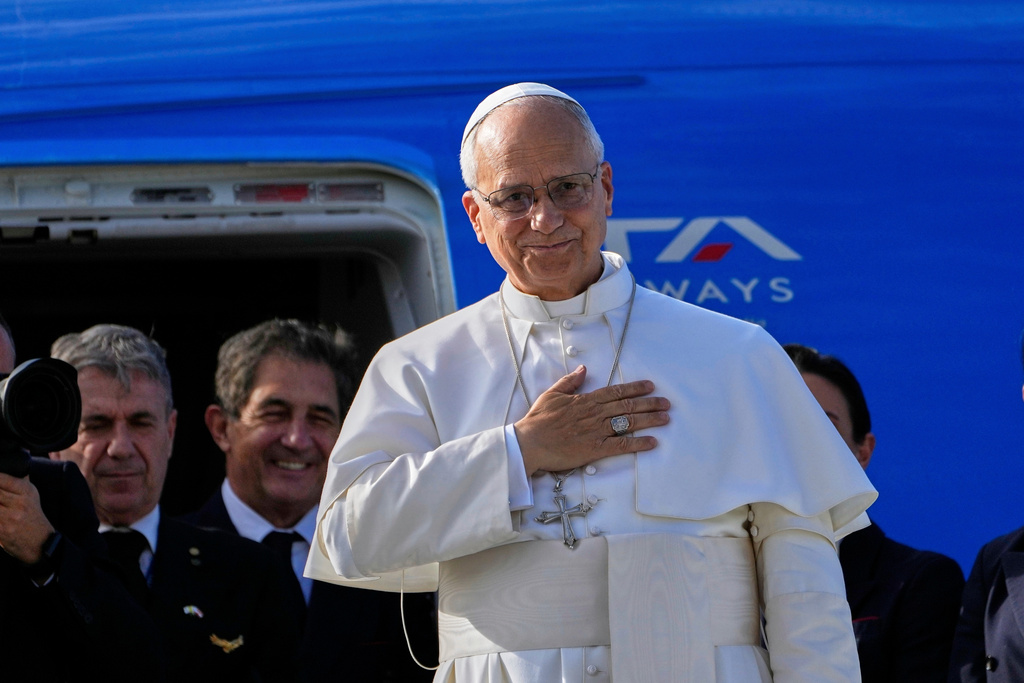
Pope Leo is issuing a warning about the latest technology experts say will revolutionize the economy, job market and even our personal relationships: artificial intelligence.
In an address to participants at a conference on the new technology last week, the first American pontiff said artificial intelligence poses serious ethical concerns about its impacts on humanity. Leo emphasized that it must always safeguard the human person.
Young people "must be helped, not hindered, on their path to maturity and responsibility," he said, according to the Vatican.
"The ability to access vast amounts of data and information should not be confused with the ability to derive meaning and value from it," the pope said.
"The well-being of society," he said, depends on young people's "ability to develop their talents and respond to the demands of the times and the needs of others, with generosity and freedom of mind."
The pope said the development of AI should be a collaborative effort involving many industries, including business, finance, education and faith communities.
Questions Pope Leo poses about AI
Pope Leo acknowledged that AI is already impacting millions of people daily and certain aspects of the human, such as critical thinking, discernment, learning and interpersonal relationships. He urged people to ask some fundamental questions to ensure AI is being used properly.
The pope offered examples. "How can we ensure that the development of artificial intelligence truly serves the common good, and is not just used to accumulate wealth and power in the hands of a few?"
Another question he posed was, "What does it mean to be human in this moment of history?"
Pope Leo emphasized that "human beings are called to be co-workers in the work of creation, not merely passive consumers of content generated by artificial technology."
"Artificial intelligence has certainly opened up new horizons for creativity, but it also raises serious concerns about its possible repercussions on humanity's openness to truth and beauty, and capacity for wonder and contemplation," he said.
"Recognizing and safeguarding what characterizes the human person and guarantees his or her balanced growth," he underlined, "is essential for establishing an adequate framework for managing the consequences of artificial intelligence."









 Megyn Kelly -> Pete Hegseth responds to 2017 rape accusation. 🔥 vol. 3, issue 13 | December 6, 2024 Quick Hits All the news you need in...





No comments: